
Keep your tools. Share your commitments.
Your OKRs aren't working — and you know it.
You set OKRs and they disappear into spreadsheets, slide decks, and silence. Gahmbit brings them into the open — public pledges and an honest view of who has written them — so execution matches intent. Free forever.
The product
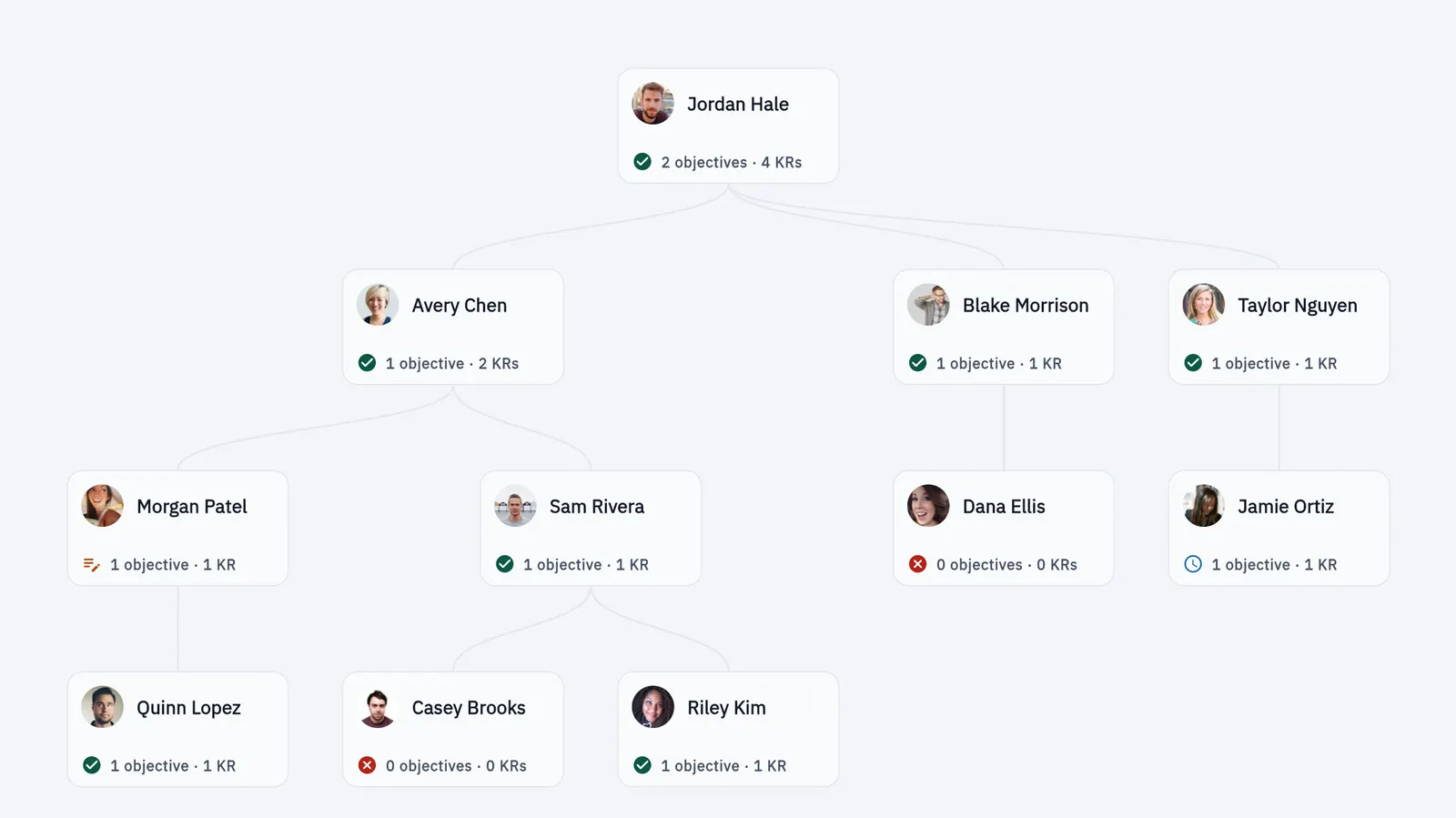
Coverage gaps, company OKRs, and alignment — in the open.
This is not another work OS. It is the place the whole company can see what was pledged, who still has nothing written — and whether execution matches intent.
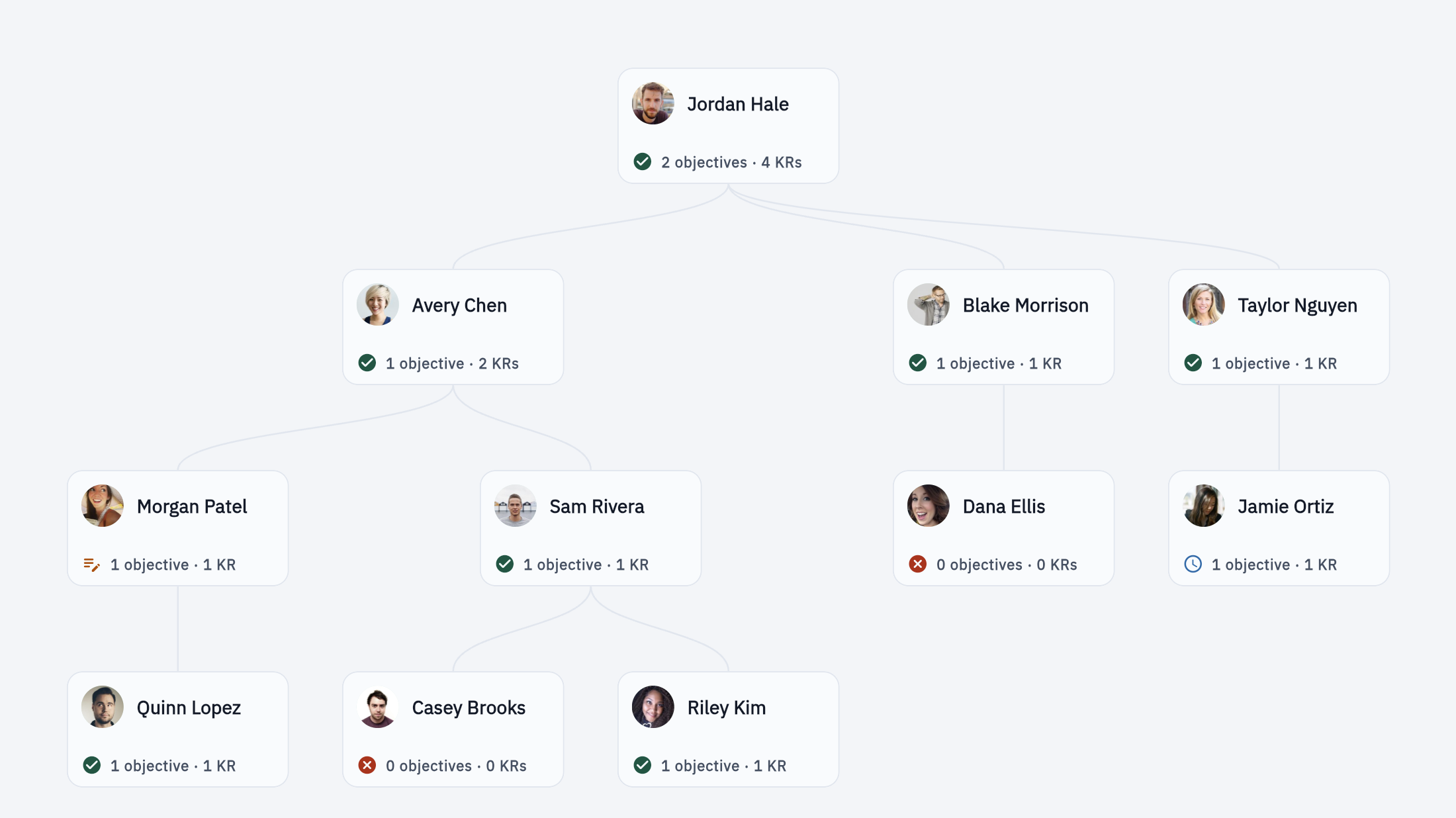
See the status of every person's OKRs
The People directory shows Has, Missing, Draft, and Pending for the whole company, including people who have not written any. Empty coverage stays on screen.
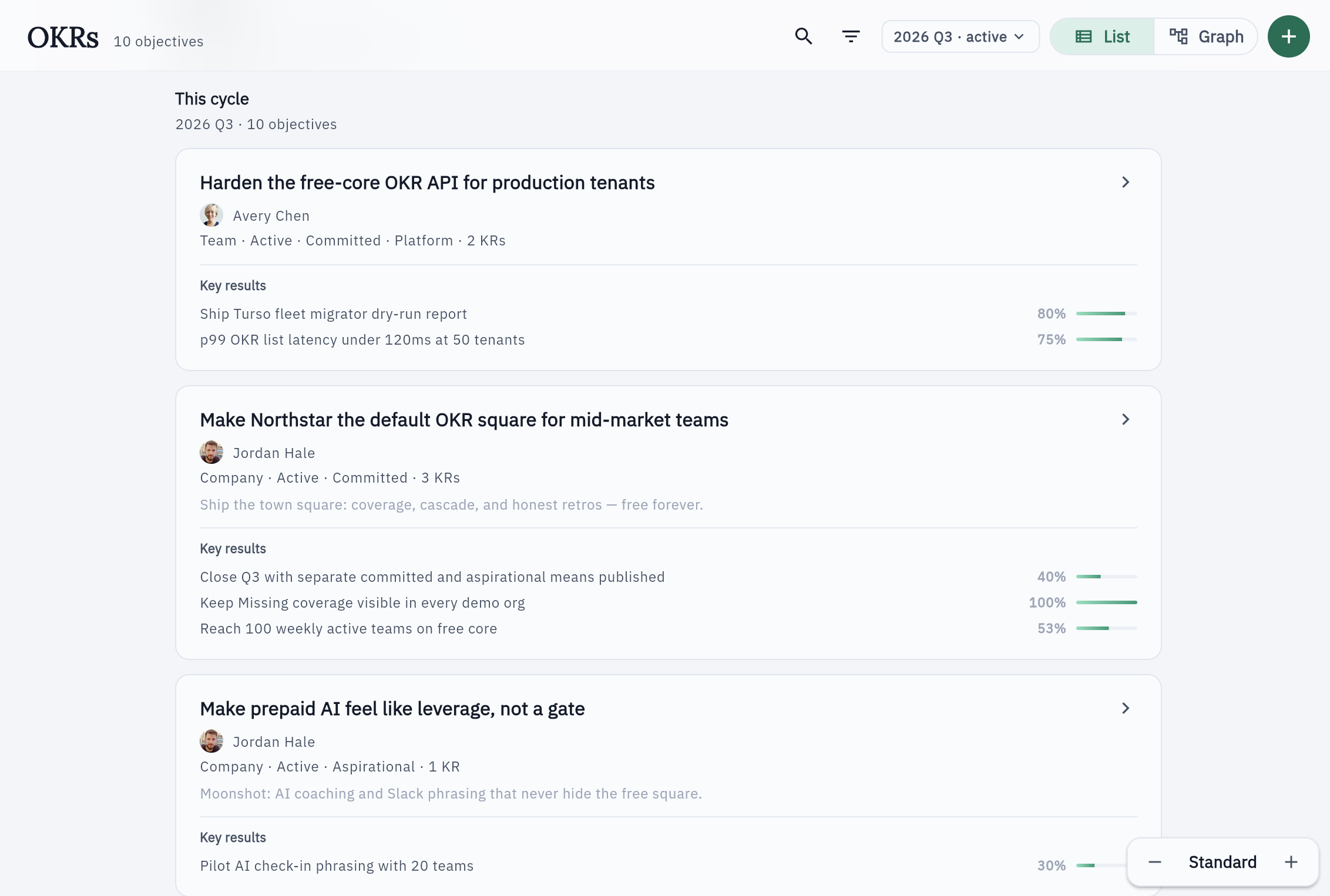
Every teammate can read every objective
Company, team, and individual OKRs are visible to every authenticated member. There is no hide toggle.
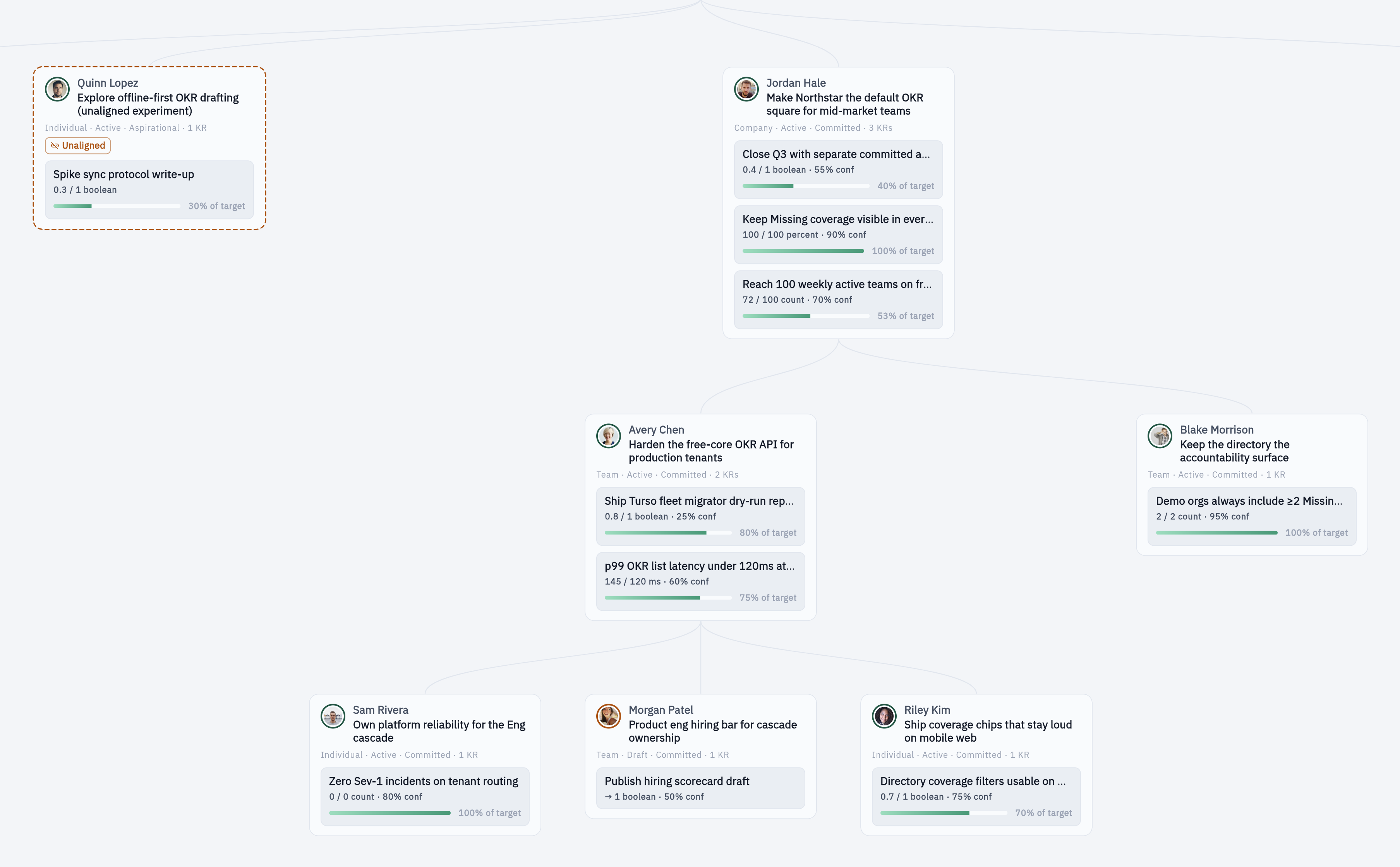
Objectives line up to the company
Vision, Mission, and long-horizon aims sit above the cascade, and each objective can link to the company objective it supports. Work with no link stays visible as Unaligned, so the gap is obvious. Links show alignment only — a parent never inherits its score from children.
Why Gahmbit
Transparency is the product — not an upsell.
Most teams set OKRs, then watch them disappear into spreadsheets, slide decks, and silence — or pay a headcount tax to see what the company already needs to know. Gahmbit keeps every pledge in the open, so execution matches intent.
How you start
Four steps. The setup wizard walks the rest.
You do not have to migrate Jira, docs, or personal task lists. Start with people, a cycle, and company OKRs. You will see who has written OKRs and who has not — right away.
Create the company
Open an organization and invite people, paste any CSV — columns mapped free — or sync ChartHop. Members set their own manager after claiming. No credit card.
Open a cycle
The setup wizard teaches radical transparency and walks Vision, Mission, and a first company OKR.
Write commitments in the open
Objectives and key results are readable by every authenticated member as soon as they exist.
See who still has a gap
The People directory shows Has, Missing, Draft, and Pending. Empty stays obvious so the company can fix it.
Common questions
Not another rollout. No per-seat pricing.
Do we have to migrate everything we already use?
No. Keep personal tools. Gahmbit is where the company shares OKRs — people, a cycle, and commitments everyone can see. Workflow takeover is not the pitch.
Can a manager start bottom-up, without an enterprise rollout?
Yes. Open an org, invite your team, and run the free OKR loop — coverage, pledges, check-ins, scoring — with no seat plan and no credit card. Expand to the company when the square proves itself.
What does a “committed” objective mean?
A time-bound OKR promise for the cycle — not a git commit and not a pricing plan. Committed objectives are graded at 1.0; a miss needs a post-mortem. Aspirational moonshots are scored on a different bar (~0.7 is healthy). Untyped stays a visible gap.
How scoring worksWhat is actually free?
The OKR loop: org setup, directory and coverage, cycles, objectives and key results, check-ins, comments, the company feed, alignment, scoring, and non-AI people sync. No credit card. Optional AI uses prepaid company credits — only when you run it. A zero AI balance blocks AI only — OKRs keep working.
Can different teams run different OKR cycles?
No. The company shares one execution cycle — usually a quarter. Longer-term goals live as strategic objectives, and weekly or monthly check-ins are just how often you post updates.
Read the how-toWhere does our strategy data live?
Each organization gets its own database for people, cycles, OKRs, check-ins, and comments. Inside your company, every authenticated member can still read all OKRs.
Does AI train on or keep our strategy?
Optional AI uses private open-source models and does not train on your OKR text. Prompt bodies are not kept on the billing store, provider, or training path. When Agents run, coach transcripts, Document Alignment Review reports, and workflow findings archive in your company database so members can reopen them — product history, not a training corpus. Document uploads are not retained.
Open the books on this quarter’s commitments.
Free forever for company OKRs. No card, no seats. Optional AI credits only if you choose to run it.